Tag Archives: The Red Strokes

Martin Hill

I’ve been side-stepping interviews a bit recently in order to bring you articles of interest, but this week, I’m back at it and I have a wonderful guest.

Please help me to welcome Martin Hill, author of ‘Empty Places’, ‘The Killing Depths’, and ‘Duty’.

IDI – Martin, when did you have your Eureka moment? When did know that you were born to be a writer?

Hill Photo SM

Martin Roy Hill

MH – I came to that conclusion in high school. An English teacher enjoyed my essays and encouraged me to write. I joined the school newspaper, started studying journalism, and started writing short stories and sending them out to publishers. It was years — no, decades — before I sold one, though I did sell a Humor in Uniform snippet to Reader’s Digest when I was 19. That was my first professionally published piece.

IDI – Believe it or not, the humor sections of Reader’s Digest have always been my favorite! Tell us, within your writing, what are you the most passionate about? What is it that keeps the fire burning?

MH – I enjoy the act of writing. I feel dread each time I sit down to write, consumed by all those insecurities that every writer probably fears. Can I pull this off? Who am I to think I can write a book? Will anyone buy it? But when I finally get into the act of writing, it’s wonderful. When it’s going really good and the words are following, it’s like a high. That’s what keeps me going.

 IDI – Something every writer is asked to the point of exhaustion – where do you get your ideas?

MH – I get ideas from reading newspapers and magazines, and asking “What if?” The idea for The Killing Depths came about when I read several articles about men and women serving together in the first Gulf War and Bosnia. I started wondering, “What if men and women served together in something as confined as a submarine?” Then I thought, “What if someone didn’t like the idea of men and women serving together?” Finally, I thought, “What if that someone was a serial killer?”

Eden, on the other hand, was conceived after reading an article that said recent satellite imagery may have confirmed the location of the Biblical Eden in Iraq. I started thinking, “What if American GIs stumbled on proof of Eden? What would they find?”

IDI – What are you working on now? Can we get a peek, an excerpt maybe to tickle our taste buds?

MH – My next book is in production and should be out in the fall of this year. It’s a sci-fi novella called Eden, about a group of American soldiers in Iraq who stumble onto an ancient secret about the origins of mankind.

I am also in the process of writing a sequel to my first novel, The Killing Depths, featuring NCIS special agent Linus Schag. Schag made his first debut in a short story published by Alfred Hitchcock Mystery Magazine, and The Killing Depths has been selling very well. In the sequel, Schag has to try to stop a good friend and fellow agent who has gone rogue.

IDI – When people say ‘why do you write’, I reply ‘I’m either creative, or a pathological liar. I haven’t decided yet’, just for shock value. Actually, I think (in part) that writing is almost like being schizophrenic, but without the personalities coming out verbally. Seriously, we ‘become’ the people we write, at least for a time. We have to feel what they feel, think what they think, and know what they know… so how can we not ‘be’ them? Agree? Disagree? What are your thoughts?

MH – Oh, I definitely agree we become our characters sometimes. And sometimes our characters take on a little of us. I often lie in bed at night and think through scenes and, suddenly, I’m in the story, sort of as if I were dreaming the scene. I think we become our characters even more when writing in the first person narrative. When you write in the first person, you have to sort of get into character the same way an actor would before a play. That happened with me with my latest novel, Empty Places, and my novella, Eden, both of which are first person narratives.

IDI – Everyone has their own dream. What’s yours… best seller, feature film adaption, fame, riches, Oprah, Pulitzer?

MH – To be honest, I’m too old and too cynical to have dreams anymore. I have enough awards from my journalism career to cover three walls in my home, but they don’t mean very much to me anymore. I just want to write books people will buy, read, and enjoy.

IDI – Online cafés or writers groups (aside from social networking). Do you belong to any and if so, help or harm?

MH – I really have no opinion on writers groups or forums. I haven’t belonged to a writers group since college. I know many writers who swear by them, and that’s great. But I have so little time to write that I can’t spare it going to meetings or whatnot. I do, however, have a small knot of author around the world that I keep in touch with, and we provide each other with a mutually supportive network.

IDI – Which is it, a laptop or desktop computer for writing?

MH – I actually do most of my writing on a Kindle Fire HD tablet. I carry it and a small Bluetooth keyboard in my backpack wherever I go. When I get a chance, I bring them out and pound out a few lines.

IDI – I envy  you. I use a 23″ screen for my heavy writing and still have trouble with blurred letters from time to time. Tell me, i your opinion, what are the biggest misconceptions new authors have about the publishing industry?

MH – I think it’s the idea that writers get rich and famous. I recently read David Morrell’s excellent book on writing, The Successful Novelist. He points out that only a handful of novelists can support themselves on their writing alone, let alone get wealthy. It took Morrell decades to get to the point he could support his family on writing alone — and this is the guy whose first novel created the character Rambo (as in Sly Stallone’s movies) and who is considered by many to be the father of the modern thriller.

Morrell also points out that no matter how popular your books may become, most people still have no idea who you are.

IDI – That’s true. There are very few authors with ‘household names’. What’s the best advice ever given to you, and by whom?

MH – The advice came from my late father-in-law Robert Wade. Bob wrote some 40 mysteries under his own name as well as the pen names Wade Miller (with writing partner H. Billy Miller) and Whit Masterson, as well as others. He gave me a great deal of help on my book Empty Places, which I actually wrote before my first published novel, The Killing Depths. In fact, I dedicated Empty Places to him. Among the things he told was this: You’ve got to create characters that the reader will like, even the bad guys, even just a little. He also said in the end, you have to give the reader a little hope for a better world, either for the protagonist or the readers themselves. As originally written, Empty Places had a kind of downer ending. I did a major rewrite of the book after that, changing some of the characters’ motivations and creating a completely different ending.

IDI – Besides writing, what other interests do you have?

MH – I have a background in emergency and disaster response. I served 13 years of active and reserve duty in the U.S. Coast Guard doing small boat search and rescue, or SAR. I was also a medic with the local Sheriff’s wilderness SAR unit as well as with a federal Disaster Medical Assistance Team, and I currently serve on a local county disaster response team. I’m also a medical service corps officer with a small component of the California National Guard called the California State Military Reserve. I hold a national certification as a homeland security specialist, too, with an emphasis on medical response. And, until readers start buying my books by the thousands, I make my living as a Navy analyst in combat medical operations.

IDI – Wow, quite a list of credentials. It just goes to show that you never know who the writing bug will bite. Martin, I’d like to thank you for appearing on Ink Drop Interviews and wish you the very best of luck in all of your writing endeavors!

If you’d like to know more about Martin and his work, or contact him with your questions, he’d love to hear from you!

Amazon Author Page

Website

Twitter

Facebook

Goodreads


Ink Drop Interviews are conducted by Kathy Reinhart, author of the award-winning LILY WHITE LIES, THE RED STROKES, and MISSOURI IN A SUITCASE. Keep up with books, interviews, and upcoming contests in any one of the following places:

 Amazon

Website

Facebook

Twitter

Goodreads

Or subscribe to this blog for future author interviews and articles of interest.

Write. Or your creative ink will dry up.

Write. Or your creative ink will dry up.


Henry L. Herz

Today I’d like to welcome children’s author, Henry L. Herz, to Ink Drop Interviews.

TwigFront72small                                   NimpFront72small IDI – I’d like to thank you for taking the time from your busy schedule to join me here today. I’ll get the nuisance question out of the way first because readers usually want to know, but as writers, we are asked it so many times that answering it is somewhat perfunctory. Where do you get your story ideas?

HLH – Inspiration is a fickle muse; she arrives unpredictably. Sometimes an idea will pop into my head unbidden. For example, could you apply Six Degrees of Kevin Bacon to book characters? Yes. Yes, you can. I did it for The Lord of the Rings at http://lotrproject.com/sixdegrees/. Other times, I leave myself open to serendipity. For example, I met an artist looking to collaborate. That led me down the path to doing Little Red Cuttlefish. Sometimes the world drops a book idea in your lap. For example, I was doing a school visit, and one kid was wearing sneakers. One sneaker was fine, and the other was completely shredded. I made a mental note that The Kid with Exploding Sneakers would make a fun story. Sometimes I’ll riff off of something I read. For example, I read a Mental Floss (great magazine) article about animal defense mechanisms. That led me to come up with a sci-fi early chapter book about an alien boy who gets lost while hiking, and meets all sorts of interesting creatures.

IDI – That sounds like the type of thing my son liked to read when he was young. When did you have your Eureka moment? Did you always know that you wanted to be a writer?

HLH – I can’t say even now that I was born to be a writer. What I discovered after writing my first book, a children’s fantasy titled Nimpentoad, is that I love flexing my creativity muscle. Writing fantasy and science fiction for kids is tons of fun, and gives my head a good workout. It’s also been a pleasure to discover how helpful and collaborative other children’s book authors and illustrators can be. Experiencing freedom of self-expression and being part of a literary community has been very gratifying.

IDI – Young kids are your target audience. Why does your writing target that demographic?

Henry L HerzHLH – I write fantasy and science fiction specifically because (a) I love to do so, and (b) I think those genres are particularly powerful ways to spark a child’s imagination and plant the seed for a lifelong love of reading. I still remember to this day escaping into the magical world of Where the Wild Things Are. And if I’m doing my job as a writer, the books will have a secondary appeal to the little kid inside all adult readers. I still love picture books, and so should you! Check out Journey by Aaron Becker to see what I mean.

IDI – Truth told, I have young grandchildren, so I do love picture books! What are you working on now? Can we get a peek to wet our appetites?

HLH – My first three books were Indie-published. I’m pleased to report that I’m in negotiations right now with a traditional publisher for my fractured fairy tale Monster Goose Nursery Rhymes. I’m very excited about the prospect of transitioning to traditional publishing. I have a couple of other picture books for which I’m seeking literary representation: Little Red Cuttlefish (an aquatic retelling of Little Red Riding Hood) and Dinosaur Pirates (dinosaurs = good, pirates = good, Dinosaur Pirates = awesome). I’ve also tried my hand at writing (yes, writing) some wordless picture books. Given that my illustrations skills could easily be mistaken for those of a 2nd grader, that’s more an exercise in writing craft than anything else. Most recently, I recently submitted a non-fiction picture book about animal defense mechanisms to a traditional publisher.

IDI – Time for a silly question. (Some) writers have been known to be ‘eccentric’, from keeping rotting apples in a desk drawer to only being able to write while wearing fuzzy pink slippers. Do you have any quirks or superstitions that have become as integral to good writing as plot and character?

HLH – Rotting apples? Fuzzy pink slippers? Move along, now. Nothing to see here, ahem. Move along.

IDI – I’ve heard argument for each side (and writing children’s books might differ), but when writing, do you outline or sketch the entire book before you feel comfortable enough to begin your draft or do you prefer to fly by the seat of your jockeys?

HLH – It is definitely a stylistic choice. Anyone who knows me personally can tell you I’m a very analytical person. So, it should come as no surprise that I’m a plotter, not a seat-of-the-pantser. Writing is hard work. Fun, but effortful. So, I don’t want to overwrite. I prefer to outline my plot to ensure everything that needs to happen happens (and no more), and in the right order. Outlines lead to storyboards, and storyboards lead to words on the page. Remember too, young children’s books have VERY constraining word counts. Picture books, for example, are typically 500 words or less. That’s not much room in which to develop a character and convey a compelling story arc. Every word counts.

IDI – Pen and paper or computer and Word? The bustle of Barnes and Noble or the quiet of your study? Alone or within a writing group? Tell us, what is your most productive/inspiring setting?

HLH – I am definitely a computer-based writer. The ability to type faster than I write, combined with the ability to cut and paste electronically, make this a no-brainer for me. That said, it is handy to carry a piece of paper (or a smart phone) with you at all times to jot down the occasional inspirational idea that floats by.

When I’m in the zone, concentrating on writing, then it doesn’t really matter where I am. That said, I prefer working from home for the convenience. I don’t have to drive anywhere or worry about whether there is a comfortable workspace available. Plus, staying at home has a smaller carbon footprint!

IDI – Online cafés or writers groups (aside from social networking). Do you belong to any and if so, help or harm?

HLH – On the one hand, there are writers and illustrators I’ve only “met” online, and they’ve been fabulously helpful and collaborative. On the other hand, you build stronger trust and relationships meeting in person. So, while I’m active (as @Nimpentoad) on Twitter, Facebook, etc., I also value participation in face-to-face critique groups. I belong to two. Note that a bad critique group is worse than no critique group, because they are taking up your time, potentially giving you unhelpful advice, and possibly crushing your morale. A good critique group helps you grow as an author and keeps you energized. They point out flaws, but also offer suggestions about how to resolve them. How do you know if a critique group is good for you? You have to give it a test drive.

IDI – In your opinion, what are the biggest misconceptions new authors have about the publishing industry?

HLH – First, that writing a picture book is “easy, because it’s only 500 words.” Second, some new authors view Indie-publishing as the fall-back position to take if no traditional publishers show interest. Traditional and Indie-publishing are both valid paths, but they are dramatically different. They both offer advantages and disadvantages. I think it is critically important for new authors to understand all the work involved in Indie-publishing BEFORE they embark on that journey. Indie authors are not just authors, they are also publishers. Yes, you get all the control, all the profits, and make all the decisions. But you are also responsible for EVERY aspect of designing, publishing, promoting, and distributing your book. If you’re not already famous, promoting your book is an unending Sisyphusean task. Would you rather be spending your time writing or promoting books?

IDI – What advice would you give to new/unpublished authors?

RhinoFront72smallHLH – Read in your genre. If you have time, read outside your genre. 2. Write. Then write some more. You’re strengthening a muscle, so you have to exercise it. 3. Find a nurturing critique group. Join a professional association. I’m a member of the Society of Children’s Book Writers and Illustrators; it is excellent. 4. Kill your darlings. What you think is a great plot is not a great plot if no one else gets it. Be willing to incorporate constructive criticism. 5. Be thick-skinned. It doesn’t matter how well you write. Your work will be criticized by critique groups, readers, and reviewers. You will be rejected by literary agents and editors. View every “no” as a “not yet.” View it as an opportunity to improve your craft. 6. Be patient. Getting recognized for your work can take a long time. Traditional publishers are overworked and move slowly. If you want to be traditionally published, you must move at their pace. 7. Be professional. Remember that your blog posts, Facebook posts, and Tweets are visible to agents and editors. It is in your best interest to convey a professional image. Save the political or religious beliefs for your face-to-face interactions. Never badmouth people, especially authors, reviewers, agents, or editors.

IDI – Favorite author, and why?

HLH – As a dyed in the wool fantasy geek, I am required by State and Federal regulations to respond: J.R.R. Tolkien, for The Lord of the Rings. His work combined a masterful command of language, richly textured world-building (including inventing multiple languages and thousands of years of back story), and an achingly beautiful story about good versus evil. I’ve read it so many times, I can recognize the scene if someone reads me a single sentence. Go ahead, try me. I’m like a Middle Earth Rain Man.

IDI – What are some of your favorite quotes?

HLH – C.S. Lewis is perhaps best known for his Narnia fantasy series, but he also wrote some profoundly insightful pieces on spirituality.

“People often think of morality as a kind of bargain in which G-d says, ‘If you keep a lot of rules I’ll reward you, and if you don’t I’ll do the other thing.’ I do not think that is the best way of looking at it. I would much rather say that every time you make a choice, you are turning the central part of you, the part of you that chooses, into something a little different from what it was before. And, taking your life as a whole, with all your innumerable choices, all your life long you are slowly turning this central thing either into a heavenly creature or into a hellish creature: either into a creature that is in harmony with G-d, and with other creatures, and with itself, or else into one that is in a state of war and hatred with G-d, and with its fellow-creatures, and with itself. To be the one kind of creature is heaven: that is, it is joy and peace and knowledge and power. To be the other means madness, horror, idiocy, rage, impotence, and eternal loneliness. Each of us at each moment is progressing to the one state or the other.” “Love (or charity) for our neighbors is quite a different thing from liking or affection. We ‘like’ or are ‘fond of’ some people, and not of others. It is important to understand that this natural ‘liking’ is neither a sin nor a virtue, any more than your likes and dislikes in food are a sin or a virtue. It is just a fact. But, of course, what we do about it is either sinful or virtuous. But though natural likings should normally be encouraged, it would be quite wrong to think that the way to become charitable is to sit trying to manufacture affectionate feelings. Some people are ‘cold’ by temperament; that may be a misfortune for them, but it is no more a sin than having a bad digestion is a sin; and it does not cut them out from the chance, or excuse them from the duty, of learning charity. The rule for all of us is perfectly simple. Do not waste time bothering whether you ‘love’ your neighbor; act as if you did. As soon as we do this we find one of the great secrets. When you are behaving as if you loved someone, you will presently come to love him.” IDI – Give us a brief overview of your books and where we can learn more.

HLH – More information about my books is at www.henryherz.com. I also interview children’s, fantasy, and sci-fi authors there. My three beautifully illustrated (not by me, obviously) books are: Nimpentoad (early chapter book) – The clever little Nimpentoad leads his fellow Niblings through the perilous Grunwald Forest, overcoming obstacles and encountering strange creatures along the way. Twignibble (easy reader) – Twignibble is a very smart and mechanically adept sloth, with animal friends all over the world. When he learns that his friends are in danger from pollution and poaching, he builds a helicopter to visit them. Twignibble helps each friend by making them a special gadget. How the Rhino Got His Skin (picture book) – This is a picture book retelling of the classic Just So Stories by Rudyard Kipling, with language updated for today’s young readers.

IDI – I’m always fascinated by fellow writers who pen in a genre other than what I consider my comfort zone. Thank you for being my guest today, Henry, and best wishes for continued success.

A quick word to my readers. I write this blog for YOU. Each and every one of you. Like everyone these days, writers are busy and don’t have a lot of time to read about fellow authors. They read advice blogs, but when it comes to reading interviews about other authors, especially Indie authors, there are so many authors and not enough time. So, each time I sit down to type out another interview, I do it with my readers in mind, after all, if it weren’t for the readers and the fans of Indie authors, none of us would have a job. Having said that, I’d like to ask you all a favor. Nothing big, not even time consuming, but a favor just the same. When you finish here, if your kids aren’t screaming your name or your boss isn’t making his way toward your desk with a frown on his face (smile), please take a minute to visit Henry’s website, or my website, or your favorite author’s Amazon site and leave a few words. Jot down what you think of them, or me, or our work. Not only do we thrive on it (Seriously), but your comments have something to do with the algorithms and how our sites are ranked and found on the search engines. I’m certainly not the one to explain the inner workings of the internet, but I know that your comments, reviews, follows, feedback, and basically any interactions are worth their weight in gold. If we each give a helping nudge to the person standing next to us, everyone benefits. Thank you!

Ink Drop Interviews are conducted by Kathy Reinhart, author of the award-winning LILY WHITE LIES and the highly acclaimed THE RED STROKES.

Please visit Kathy for the latest news, contests, titles, and a chance to appear on Ink Drop Interviews.

????????????????????????????? 292 x 467


Elizabeth Love

Hello everyone!


It’s been a while since I posted a new interview. I have been busy with a few projects of my own, including my latest release, THE RED STROKES, which is available at Amazon. By the way, it’s on sale for one more day before going back up to regular price, so now’s the time to check it out.

In the meantime, I have recently had a few requests for interviews, so I have dusted off the questionnaire and would like to introduce you to Elizabeth N. Love, (also known as ‘Bee Love’) author of POURING THE CUP.

IDI – Tell us, Elizabeth, What are you working on now? Can we get a peek, an excerpt maybe to tickle our tastebuds?

ENL – I am working on a follow-up to Pouring the Cup entitled The Dark Days that brings closure to the open ends from the first book, such as what happens to the Prophets who are left alive after the Stormflies break loose, and will Axandra and Quinn’s romantic relationship continue. The next work also continues to describe the culture and traditions of the people who separated themselves from humanity centuries ago, looking at both similarities and differences. I worked on the first chapters vigorously this week.  The draft is still rough, but here is an excerpt:

Spring lagged this year, sprinkling the beginning days with plummeting temperatures, thundering snow storms and rapid warm flashes that melted the white away within hours of the snow’s accumulation. The climate appeared to be exhibiting all the symptoms of a bout with river fever, the hot and cold flashes that plague anyone who falls victim to the annual virus. During the warm respites, people availed themselves of the sunny, though damp, outdoors, preparing for Spring’s intense work of planting fields and repairing buildings.

”Do you remember seeing any children at the Prophet Haven?” Ty Narone asked Quinn Elgar from across the wrought iron table on the veranda protruding from the back of the People’s Hall. The wide, flat raised surface overlooked the drowsy garden. When the plants lost their leaves and blooms to sleep away the winter, the garden appeared sad and forlorn.

The two gentlemen shared an unusual meeting, one requested by Narone. The Commander of the Palace guard brought with him a three page report with the intent of enlightening Elgar to its contents. Although he accepted his orders from his only superior, the Protectress, Ty had not yet come completely to terms with Mr. Elgar’s residence within the Palace. Elgar’s continued presence caused the security officer a great deal of consternation. They rarely spoke to one another and behaved guardedly in each other’s presence. Ty assumed Elgar’s lack of communication meant the man was hiding something. Quinn described the Commander as reticent when asked.

Quinn took several minutes to review his memories of the Haven, having only briefly visited the forsaken mountain home of the Prophets a few months ago. From the moment they stepped into the split mountain beneath the Great Storm, Quinn observed every detail, every step, every face, every doorway. Of the 430-odd Prophets living in the stone city, not one of them appeared to be less than thirty years old. No children, and no evidence of children.

IDI – Before THE DARK DAYS came POURING THE CUP. Give us an insight into your main character. What does he/she do that is so special?

ImageENL – The lead protagonist of Pouring the Cup is an imperfect woman, but not in a stereotypical way. She has been created with a number of faults and she is an introvert who would like nothing better than to hide in her cottage most of her life.  Not by choice, she is destined to be the vessel for a very strong parasite and she has to find a way to live with the burden or find a release, which forces her into an extroverted lifestyle as a public figure.

IDI – Are your stories plot or character driven? 

ENL – My stories are much more character-driven, because I want to express the characters reactions to their role within the plot. I love the study of the mind and emotion and all of the contradictions that go with it. For instance, in Pouring the Cup, the protagonist’s need to isolate herself from most of society makes her transition to a public figure much more difficult. She is a classic introvert, so socializing can be an exhausting task, plus she happens to be harboring another sentient entity inside her body. That secret makes her more withdrawn. Opening up and revealing that secret to the ones she loves drives the plot forward.

IDI – Something every writer is asked to the point of exhaustion – where do you get your ideas?

ENL – Ideas come from everywhere, but I usually pull from reading other books or the NPR news. The idea for Pouring the Cup started decades ago when I first became interested in the concept of human beings leaving Earth to find a new home. The questions were “Why did they leave?” “Where did they go?” and “What did they do when they got there?”  But instead of focusing on the journey or the initial arrival on the new planet, I set up a society that’s been thriving for centuries and is well established in its ways. So then the question becomes “How did they use their history to better themselves?” In this case, the people left because they were persecuted for who they were, similar to the Pilgrims, and they built a society where no one would feel unwanted or left out.

IDI – I’ve heard argument for each side, but when writing, do you outline or sketch the entire book before you feel comfortable enough to begin your draft or do you prefer to fly by the seat of your jockeys?

ENL – For any of my stories, I first form a goal in my head of where I would like to see the story end up, but this is just a guideline. I’ve tried outlining, but then I feel like I’ve already written the story. I pick a starting point, create a character and let the character lead me down the path. Pouring the Cup originally started out with dragons and the main character had children. Later on, both of those things disappeared in favor of the protagonist’s personality.

IDI – When people say ‘why do you write’, I reply ‘I’m either creative, or a pathological liar. I haven’t decided yet’, just for shock value. Actually, I think (in part) that writing is almost like being schizophrenic, but without the personalities coming out verbally. Seriously, we ‘become’ the people we write, at least for a time. We have to feel what they feel, think what they think, know what they know… so how can we not ‘be’ them? Agree? Disagree? What are your thoughts?

ENL – I agree that our characters represent personalities within the writer. In order to write a character well, you have to let yourself think the same way they do, even if only temporarily. I use writing to express parts of myself that people in the real world don’t see much of. My co-workers believe I’m a patient, kind, easy-going person.  In reality, my patience is about a hairs-width and I can say some pretty mean things. Writing lets me work out some of the dark parts, or just explore questions I have about my own personality in a safe zone.

IDI – Pen and paper or computer and Word? The bustle of Barnes and Noble or the quiet of your study? Alone or within a writing group? Tell us, what is your most productive/inspiring setting?

ENL – Pen and paper are a lot more portable for those inconvenient moments when an idea strikes, such as waiting in line at the grocery store, sitting a waiting room, or sitting in the park. Plus, I like to see what I scratched out in case I want to use something later on. Typing in the computer from my handwritten notes is a great first editing process.  I can type a lot faster than I can think.

IDI – I know I have ideas for stories that cross over the lines of my usual genre. Do you have any such ideas wandering around and if so, what’s your outlook of genre crossing?

ENL – In my opinion, genres are arbitrary divisions in literature and music. Not every book fits neatly into one genre, and not every writer wants to stick to one genre.  I like to write science fiction, fantasy, and main-stream, sometimes poetry. I hope to complete my non-fiction biographical in the near future, which is a far cry from science fiction. Each book should be taken on its own merit. If a writer wants to expand and express themselves in a different area, go for it.

IDI – Everyone has their own dream. What’s yours… best seller, feature film adaption, fame, riches, Oprah, Pulitzer?  

ENL – It’s safe to say I’ve imagined all of these things and what I would do with them. Most realistically, my husband has said that my book would actually make a strikingly-visual film, giving substance to the somewhat ethereal aspects of telepathy and the energy-based creatures that are the overall antagonists of the story. I even have several pieces of music picked out that would form a powerful soundtrack for such a movie.

IDI – What advice would you give to new/unpublished authors? 

ENL – Writing is really the easy part and the fun part – and if it isn’t fun for you, don’t keep doing it – but putting your work out for public view is scary. Ignore the negativity and embrace the positivity and just keep at it. Be persistent. Your audience is out there.

IDI – As a writer, what is the one thing you would most like people to know about you?

ENL – I am still trying to decide if this is all in my head, but I have a feeling that when people see that I’m from Kansas, they immediately dismiss my writing as too Christian or Conservative, of which it is neither. I’ve always felt like people who live outside of Kansas have the idea that we all live on isolated farms in a more or less cultural dessert. I have rural upbringings, but I’ve never fit into the mold of the small-town girl. I learned from my mother to read and learn about things outside of my immediate realm. My writing is actually quite humanist, and some might even say socialist. I believe in equality for everyone and hope that one day stronger communities will solve many of our social problems.

IDI – I agree with your sentiments, equality and stronger communities. Elizabeth, thank you for sharing your work and thoughts with my readers. I wish you the very best in all of your writing endeavors.

Image

Kathy Reinhart is the author of three novels, MISSOURI IN A SUITCASE (under the pen name, Nova Scott), the award-winning LILY WHITE LIES, and the current release, THE RED STROKES. Connect with Kathy through her WEBSITE where you can learn more about her, her books, and how to request your own Ink Drop Interview.


Arthur Levine

My guest today appeared on Ink Drop Interviews back in it’s early days. At that time, he was promoting his novel, Johnny Oops. I would like to welcome him back today, with his latest novel, Sequin Boy and Cindy. Please help me to welcome Arthur Levine…

IDI – Hello Arthur, it’s great to have you back.

AL – It’s great to be back.

IDI – Arthur, are your stories plot or character driven?

AL – My stories are definitely character driven. It’s not so much that I get into their skin as it is that they get into mine and sort of take over.

IDI – Who is your favorite author, and why?

AL – I like some of the indie authors I’m reading like Rebecca Forester and her Hostile Witness Series. which in my opinion is the best of legal thrillers and I must add, on a more traditional note J.D. Salinger and his Catcher In The Rye. Reminds me of Johnny Oops, or is that the other way around?.

IDI – Arthur, why do you write?

AL – I think we write what we are and probably don’t know it. Hard to accept that we can do some of the crazy things our characters do or even have these thoughts, but we must, otherwise we couldn’t write them.

IDI – Sequin Boy and Cindy is a different type of novel than Johnny Oops. What made you write it?

AL – This is my first attempt at a paranormal romance, but I hope it is more. It’s about two young people from abused backgrounds who find each other and fall in love. Here is a little excerpt.

 CHAPTER 1 Sequin Boy and Cindy

I never thought anything good was going to happen to me and then I met this girl.

I saw her standing on the other side of the train platform at Jamaica Station, NY fidgeting with the torn buckle on her faded blue backpack, waiting for the 5:35 to take her out to what I later found out was a group home in Blissville, Long Island where she lived. She’s a pretty girl with blond pigtails, big blue eyes and a great smile. And yet I sense there is something sad or withdrawn about her. Guess that makes two of us.

I think she is staring back at me.

Cindy is eighteen and works in Jamaica as a dental assistant, a job I found out she detests because she’s bored. I guess she can’t help staring across the platform at a strange-looking young man in a hooded sweatshirt who appears to have some kind of shiny colored disks on his face, which are half hidden by the hood of his sweatshirt—that’s me. My name is Billy Wolk. I’m half Native American Indian. I have spirit Ancestors.

She must be thinking, what are they, those ornaments on his face? I guess she’s wondering why this strange boy is staring at her.  Probably thinks I look sad and alone. I am. I’m taken by the good looks of this thin girl who occasionally smiles at me. I think she is smiling at me. It’s hard to be sure from this distance. No one ever smiles at me. Sometimes they stare in disbelief. I almost never smile.

Cindy says to herself, “what’s with that kid staring at me? He has some weird shiny stuff hanging from his face. I’m a little scared.”

In my mind I can still feel the sting of his belt buckle hitting me. My Native American blood comes from my mother’s side. I guess that’s where I get my black hair and light olive complexion. My mother died when I was ten years old. My real father disappeared years before. My drunken stepfather kicked me out of his home when I was sixteen after beating me bloody with the brass buckle of his belt and telling me I was a worthless outcast—a social reject. I don’t know why I’m thinking about that now.

“I hate that bastard,” bubbles from my lips whenever the image of the beatings and the hurtful words I got from my stepfather cross my mind.

I found a job working for ten dollars an hour at a pulp romance magazine with offices in Jamaica, NY as an article writer. I was always good at English and writing in high school. Any one could have written for that rag their standards were so low, but I’m digressing.

I live in a one room fourth floor walk up on Eleventh Street and First Avenue in New York City. I guess you could say it’s a dump, and am headed home when I see her. I wish I had the courage to cross the train platform and talk to that girl. I wish I had some faith in myself and wasn’t so shy.

Self-consciously I pull at the sequins on my upper lip.  I have a neat row of four gold-colored sequins sewn on either side of my nose, one long row of nine sequins in red, yellow and blue sewn on my forehead, and a tinier row of six silver sequins above my upper lip. Why did I ever let some tattoo and piercing artist in the Bronx talk me into doing this as an eighteenth birthday present to myself? I guess I wanted to keep people away from me. How anti-social can you get? I must be an idiot. Maybe my stepfather was right about me.

I’ve never been with a girl before, never even kissed one. I haven’t had much interest until now. I’ve been more in a survival mode just wanting to be left alone, but this girl across the platform with the blond pigtails really turns me on. I think she is staring at me. I wonder how much of my face she can see while I’m wearing this hooded sweatshirt? Maybe I should step back into in shadows. Why did I get these damn sequins sewn on my face? Makes me look like a real weirdo. Guess that’s what I wanted.

How do I know what I want? I’m only eighteen years old. Is she smiling at me? I think she’s smiling at me.

For days the two of us stare across the platform at each other, I always make sure to get to my train platform at the same time every day so I can see her. I don’t know what I will do if one day she isn’t there.

Finally, I get my courage up, climb up the stairs and cross down to her side of the platform. “Hello,” I barely whisper with my eyes on the ground.

I mumble in a quiet voice unused to speaking to other people about anything except yes or no or chicken and garlic sauce at the Chinese take out place, “I’m so lonely. I saw you looking at me. Can I ride with you?”

I get a real shock when Cindy gently takes my hand and simultaneously pulls my hoody back,

She hesitates and says, “Yes.” She is thinking what am I doing with this boy. He look so strange with sequins on his face, yet he looks so sad and lonely and under everything really handsome. Dare I talk to him? How can I let him ride with me on the train? Is it safe? Something makes me want to get to know the real person under those horrid shiny metal sequins.

For some reason I guess she feels drawn to me. Makes me feel good.

IDI – Do you outline or do you fly by the seat of your jockey’s?

AL – I fly. Don’t do an outline and go where my characters take me, sometimes to very strange places.

IDI – Where do your ideas come from?

AL – I’ve often wondered about that myself. They just pop into my head. People say I have a vivid imagination and my stories are unique. I just write whatever is swimming around in the back of my head. Before I sit down to write I have no idea that I had such feelings.

IDI – What are you working on now? Can we get a peek?

AL – I’m working on a sequel to Johnny Oops when the principal characters are in transition to heaven in spirit form. A little excerpt would be Johnny Oops 111 – Spirit World

CHAPTER 1

Crossing over can be hard to do. There are different phases. I Johnny Oops 11 am slowly floating down the stream on a light green Lilly Pad watching a Yellow and Blue striped Butterfly take in the blazing midday Sun from the overhanging branch of a tree. Have to be quiet now. Don’t want to disturb the balance of nature. I could never have done this before, but now that I’m in spirit form it’s easy. The sheer beauty of the scene is overwhelming. The smells are wonderful. My friends and I are now spirits in Paradise. I wonder what my family is doing now? Where are they?

IDI – (Some) writers have been known to be eccentric, from keeping rotting apples in a desk drawer to only being able to write while wearing fuzzy pink slippers. Do you have any such quirks or superstitions that are as integral to good writing as plot and character?

AL – I don’t think so. What’s most important to me is writing my thoughts down before I forget them. This can be very disconcerting to my wife who may ask a question and only get a vague What in response. Also I’m dangerous when crossing streets when a thought comes to me.

IDI – One last question, Arthur. What advice would you give to new/unpublished writers?

AL – Write what’s in your heart.

I’m including a blurb on my new novel Sequin Boy and Cindy and a bio on myself. Hi everyone, the White Buffalo is coming. She can make your dreams come true. Sequin Boy and Cindy my new novel has recently been published on kindle. http://www.amazon.com/dp/B0085M3BZ6

There is no room for loneliness when two lost souls find each other, fall in love, suffer adversity and go on to enjoy heartwarming success.  The spirits of Billy’s Indian Ancestors and a mythical White Buffalo combine with God’s inspiration to protect our young couple in this paranormal romance plus. You’ll laugh and cry as life and the powers that be take them on a roller coaster ride of highs and lows. Join Billy and Cindy as they learn to love together, raise a family and experience the pure pleasure of giving back to the community. You’ll relate as their wild antics take on special meaning and offer a new dimension to the art of the possible in a love story for the ages.

A little about Arthur:

Arthur J. Levine is a spiritually oriented computer junky and writer who envisions vast social changes taking place as a result of technological innovations on the Internet incorporating the use of artificial intelligence, quantum computing and virtual reality.

He has a background in finance and publishing and is the author of the novel Johnny Oops, Johnny Oops 11 – Timeless, Sequin Boy and Cindy and the how to find faith books The Magic of Faith and The Search For God Stories. He has also written Futures/Past, Homegrown Terrorists, Voyeur Bomb, The Magic Pill and Wasn’t Man. He is a former Director of New Business for Family Circle Magazine and graduated from The Wharton School of Business with a BS in Economics. Mr. Levine is married and has three children and seven grandchildren.

Keep in touch!

Facebook Twitter Goodreads LinkedIn

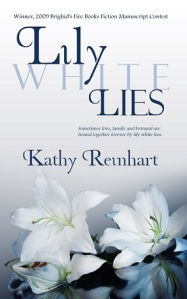
Missouri in a Suitcase Lily White Lies

Both available in Kindle and paperback – Prime members borrow for FREE!

 (Coming Soon) ‘The Red Strokes’

Enjoy an excerpt:

Birth is an empty canvas. Life is the color we apply. Blues and greens, peaceful and unassuming. Pastels for hope. Varied hues of yellow and orange add warmth and contentment while shades of gray mark regrets and change. But it is the red strokes, lies and truths, vibrant and bold, the moments that fill our hearts with joy and bring us to our knees in desperation that place value on our lives. It is the red strokes that shape our integrity and define who we are. Only once a canvas is complete can we appreciate it as a true work of art.

My canvas is now a completed work and as you will learn in the upcoming weeks, many of the strokes of my life were red. I have done things in my life that were both honorable and unconscionable. I have made decisions that were questionable, but have never lent a second to regret. I’ve known shame and pride. I am not going to apologize for the decisions I have made or for the life I have lived. I am not seeking your forgiveness. I am hoping. Hoping that you will understand. And through understanding my red strokes, may you come to recognize and embrace your own.

                               ~ Jake Tallman, in a deathbed letter to his daughters – ‘The Red Strokes’.

Wordle: I Would Like To Thank...


K.E. GARVEY

The Official Website

People We Know

They're more interesting than you think.

Diane Gallagher Photos

Photos taken around the world...

Damyanti Biswas

For lovers of reading, crime writing, crime fiction

Jean Lee's World

Writer of Young Adult Fantasy

A Holistic Journey

When you don't see your path, you can build one.

The Writersaurus

Adventures in Writing, Editing, and Publishing

davidjrogersftw

Starting life Fresh: Living to Win

Sarah Lea Stories

Where brevity is literary minimalism®

BookPeople

Howdy! We're the largest independent bookstore in Texas. This is our blog.

Book of words

Books, reviews and all things worth reading

101 Books

Reading my way through Time Magazine's 100 Greatest Novels since 1923 (plus Ulysses)

The Misfortune Of Knowing

Books, Writing, & the Law

Kristen Lamb

Author, Blogger, Social Media Jedi

Stroppy Editor

Minding other people’s language. A lot.

Live to Write - Write to Live

We live to write and write to live ... professional writers talk about the craft and business of writing

Drinkers with Writing Problems

Literature by the Lit Up

Guild Of Dreams

Build Your World and They Will Come

Ink Drop Interviews & Reviews

Personal Blog of Author K.E. Garvey

Women.Who.Write.

“Nothing stinks like a pile of unpublished writing.” – Sylvia Plath

Writer Unboxed

about the craft and business of fiction

Ryan Lanz

Fantasy Author

Design a site like this with WordPress.com
Get started